

Achieve the perfect texture and uniformity for your products with bowl cutters and emulsifiers from BAK Food Equipment.
Introduction to Industrial Bowl Cutters and Pass Through Emulsifiers
What is an industrial bowl cutter?
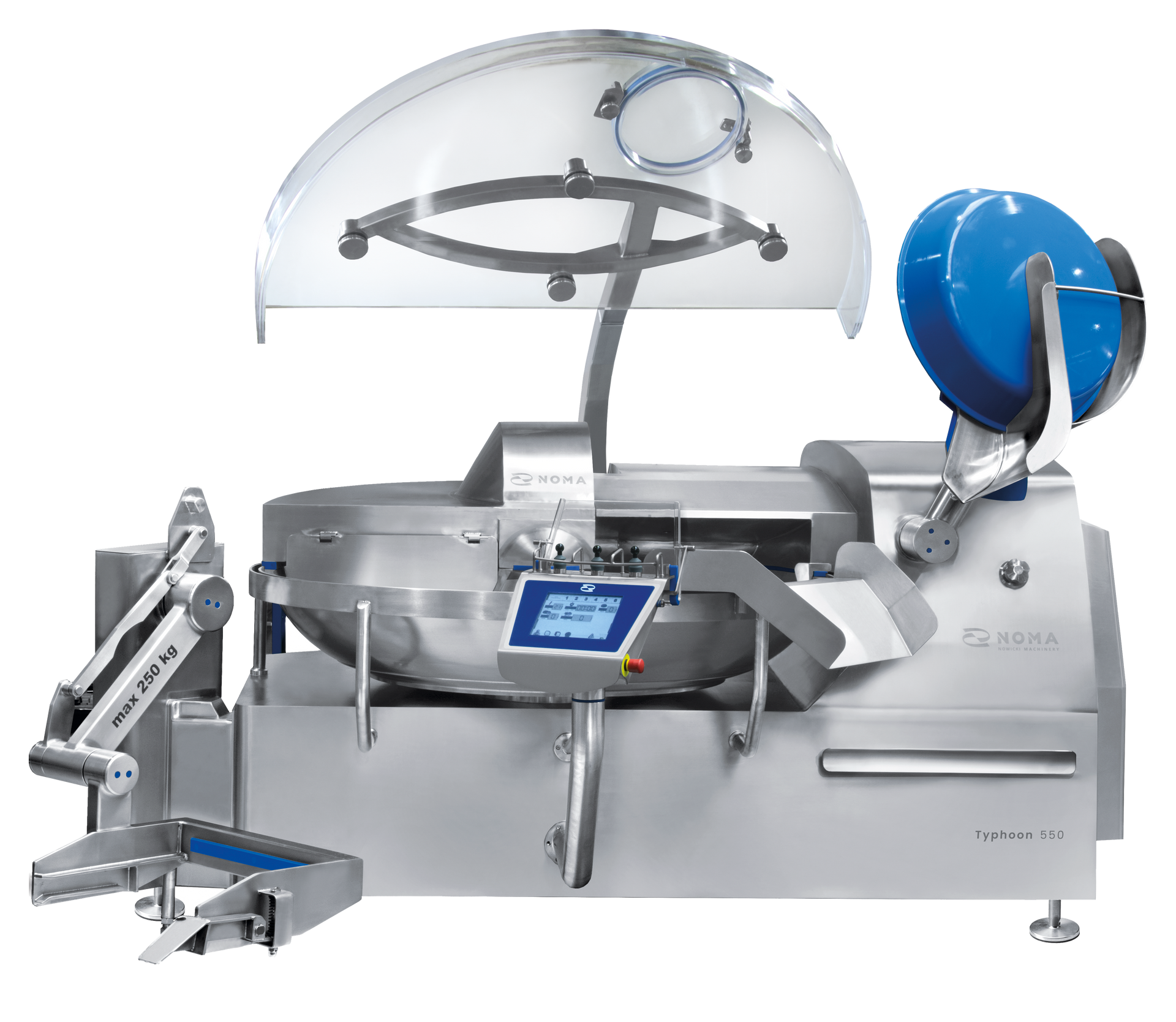
At its core, an industrial bowl cutter consists of a rotating bowl and a high-speed knife head that finely chops, emulsifies, and mixes ingredients to create a variety of food products such as hot dogs, sausages, sauces, and more.
What role do bowl cutters play in food processing?
Bowl cutter machines can mix, chop, and emulsify ingredients all in one, which differentiates them from other emulsifiers and other meat processing equipment. By precisely controlling the speed of both the cutterhead and the bowl, operators can tailor the cutting and mixing process to the specific needs of each product. This level of control ensures that meat, fat, and other ingredients are homogenized to the desired fineness.
What is a pass through emulsifier?
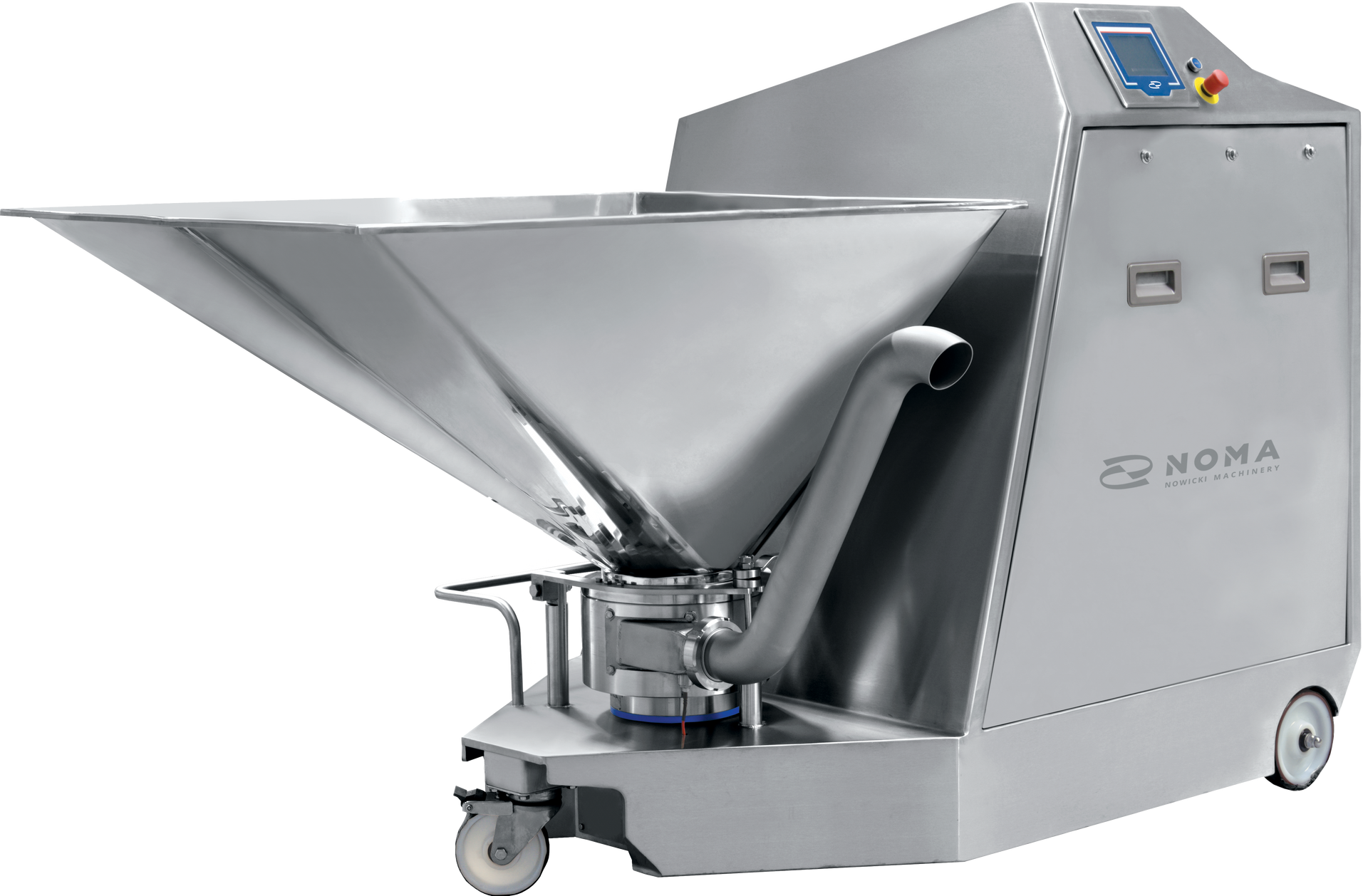
A pass through emulsifier is a machine that can continuously receive ingredients and output an emulsified end product.
How do BAK Food Equipment’s bowl cutters and pass through emulsifiers differ from standard equipment?
BAK Food Equipment’s high-speed bowl cutters and pass through emulsifiers stand out due to their advanced design and industrial build.
Each bowl cutter model is equipped with an optimized cutting chamber and knife head capable of reaching high RPM, ensuring efficient emulsification and high production output. The intuitive programmable control panel allows operators to store up to 40 custom programs, adjusting variables such as cutterhead speed, bowl rotation speed, and temperature for consistent, repeatable results. BAK’s bowl cutters are also designed for easy cleaning and maintenance, reducing downtime and supporting food safety.
Optional features like hydraulic loading/unloading systems, water dosage, and SCADA monitoring further enhance efficiency. With robust stainless steel construction and a range of capacities, BAK Food Equipment’s bowl cutters deliver the durability, flexibility, and performance required by modern food processors.
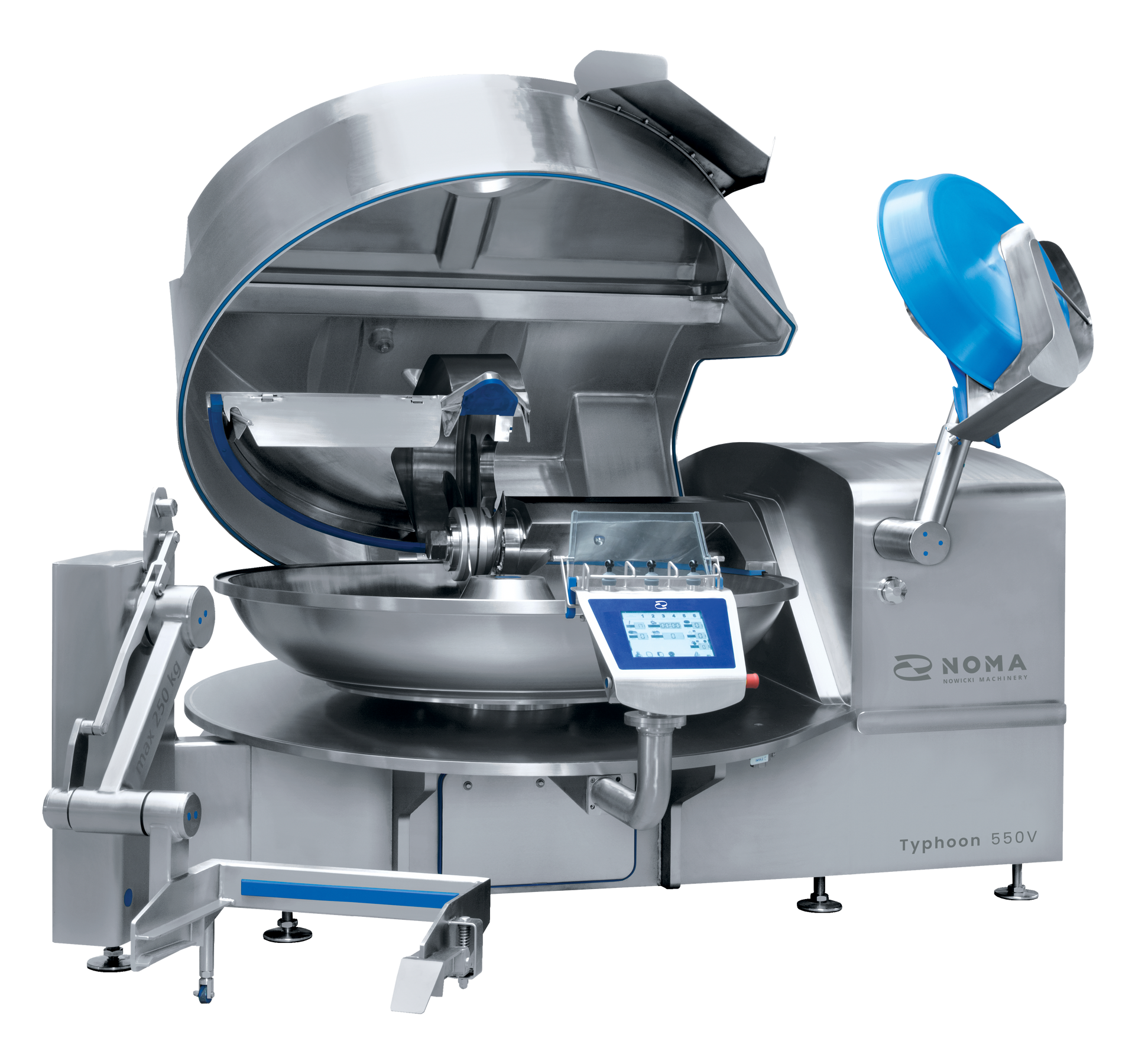
BAK's vacuum bowl cutters feature all the benefits of the non-vacuum models along with a continuous vacuum ability to increase yield and enhance product quality and consistency.
BAK Pass Through Emulsifiers feature a high-quality build and innovative design. Between the full stainless steel design and innovative no metal to metal contact system, the system is designed to be durable and easy to maintain.
High-Speed Bowl Cutters (Series KN)
What features make high-speed bowl cutters efficient?
The Series KN high-speed bowl cutters from BAK Food Equipment combine an optimized cutting chamber with a high-speed knife head for efficient emulsifying and mixing in industrial food processing.
Variable control allows operators to adjust cutterhead rotation speed, bowl rotation speed, and temperature to suit the product and desired texture. The intuitive touchscreen control panel stores up to 40 custom programs, helping production teams recall settings and maintain repeatable results across batches.
Constructed entirely from stainless steel, these bowl choppers are designed for demanding industrial use. Accessible cleaning and maintenance help support routine sanitation and production uptime.
What industries and products benefit most from high-speed bowl cutters?
Series KN bowl cutters support medium-to-large meat, poultry, and seafood processing facilities producing homogenized meats, fat emulsions, and meat fillings. Applications include hot dogs, fine emulsion sausages, salami, pet food, and ready meals, as well as products in the confectionery, fruit, and vegetable sectors.
Bowl volumes range from 60 to 750 liters, with published batch capacities of approximately 100 to 1,325 pounds across the range. This selection allows processors to evaluate increasing batch sizes alongside their required output and available plant space.
For high-volume production, equipment selection should also account for the labor and time involved in moving ingredients and finished product. Optional hydraulic loading and unloading systems can help streamline these transfers, while programmable settings support consistent processing across repeat production runs.
High-Speed Vacuum Bowl Cutters (Series KN V)
How does vacuum technology improve food processing results?
The Series KN V high-speed vacuum bowl cutters reduce the presence of air during cutting and emulsifying. Vacuum processing produces a denser, more uniform product with fewer air pockets, making it useful for processors seeking consistent texture in emulsified meat, poultry, and seafood products.
Reducing air exposure helps limit oxidation, supporting color stability and shelf life. Vacuum processing can also improve protein binding and moisture retention, supporting higher yield. Results depend on the product formulation and processing conditions.
What makes vacuum bowl cutters ideal for large-scale facilities?
Series KN V bowl cutters are designed for demanding industrial food processing, with bowl capacities up to 750 liters to accommodate larger production batches. Hydraulically operated covers, programmable controls, and stainless steel construction support daily operation in medium-to-large processing facilities.
Hydraulic loading and unloading systems help move raw materials and finished emulsions, reducing manual handling and supporting efficient batch turnover. An intuitive touchscreen stores up to 40 custom programs so operators can recall processing settings for repeat production runs.
As batch size increases, processors should evaluate the equipment footprint alongside loading access, discharge arrangements, and connections to the rest of the production line. Matching these requirements helps the selected bowl cutter support both the desired product characteristics and the facility’s production schedule.
Pass Through Emulsifiers (Series KR)
What is the role of emulsifiers in food processing?
Industrial emulsifiers are essential in food processing for creating stable mixtures of ingredients that would otherwise separate, such as fat and water. In the context of meat, poultry, and fish processing, emulsifiers are used to finely cut and blend raw materials, resulting in a uniform texture and improved product consistency. This process is also critical in the production of confectionery, pharmaceuticals, and certain chemical products, where precise particle size and homogeneity are required.
By ensuring a consistent emulsion, these machines help manufacturers achieve the desired mouthfeel, appearance, and shelf life in their products.
Why choose a pass through emulsifier?
Pass through emulsifiers, such as the Series KR, offer several key advantages for industrial food processors over other commercial emulsifier machines. The compact and mobile design of the Series KR makes it easy to integrate into existing production lines or move between processing areas as needed.
Another advantage is the inline adaptability of the Series KR. It can be seamlessly incorporated into automated production lines, supporting continuous processing and reducing manual handling. This not only boosts productivity but also helps maintain product integrity by minimizing exposure to external contaminants.
Applications for pass-through emulsifiers extend beyond meat and poultry to include fish, confectionery, pharmaceuticals, and chemical industries. Their versatility and robust performance make them a valuable asset for any operation seeking to improve product quality, efficiency, and safety in their processing workflows.
Benefits of Industrial Bowl Cutters & Emulsifiers
Why are bowl cutters and emulsifiers essential for modern meat and food processing?
Industrial bowl cutters and emulsifiers help medium-to-large processors achieve consistent texture while meeting demanding production requirements. Bowl cutters combine mixing, chopping, and emulsifying within a batch process, while pass-through emulsifiers support continuous production of a fine, uniform emulsion.
For meat, poultry, and seafood facilities, matching equipment to the product and required output helps maintain consistency as production volumes increase. Coordinating loading, processing, and discharge can also reduce unnecessary manual handling and improve product flow through the line.
What advantages do they provide over traditional equipment?
Modern industrial bowl cutters and emulsifiers give processors greater control over product texture and processing conditions. Their practical benefits include:
- Production efficiency: Programmable controls help operators recall processing settings, reducing repeated manual adjustments. Suitable loading and unloading systems can also reduce the labor involved in transferring product.
- Product consistency: Controlled cutting and emulsifying support uniform textures in products such as sausages, pâtés, and spreads. Vacuum bowl cutters provide an additional option when denser products, reduced air incorporation, and higher yield are priorities.
- Cleaning and durability: Stainless steel construction and accessible cleaning areas support routine sanitation and maintenance in demanding processing environments. These features help teams carry out the facility’s established food safety procedures.
The appropriate configuration depends on batch size, product requirements, and the surrounding production line. Evaluating these factors together helps processors select equipment that supports consistent output and efficient daily operation.
Choosing the Right Bowl Cutter or Emulsifier for Your Facility
What factors determine the right bowl cutter/emulsifier for a production line?
Start with your product, desired texture, and production requirements. The right equipment must deliver the required consistency while fitting your facility’s available space, material handling systems, and existing production line.
For medium-to-large food processing facilities, evaluate:
- Batch size and overall throughput: Consider how much product each batch must contain and the output required across a shift. Include time for loading, processing, unloading, and cleaning when assessing batch capacity.
- Product type and texture: Identify whether you need flexibility across different textures or a consistently fine emulsion, such as that used in fine emulsion sausage.
- Standard or vacuum processing: Consider the desired product density, air incorporation, and yield requirements.
- Plant space and product movement: Allow room for the equipment, loading and unloading systems, operator access, and sanitation. Review the labor involved in transferring ingredients and finished product.
- Controls and integration: Determine the need for repeatable programs, recipe changes, and automation, along with compatibility with existing upstream and downstream equipment.
How does batch size and product type influence equipment selection?
Product characteristics help determine whether a standard bowl cutter, vacuum bowl cutter, or pass-through emulsifier is appropriate. Production volume then helps determine the capacity and number of units required.
Standard KN bowl cutters offer flexibility across products and textures. Adjustable processing settings allow operators to control the degree of cutting and emulsifying, making these bowl choppers useful when a facility produces several recipes with different levels of fineness. Standard processing can also suit products where a lighter, more open texture is desired.
KN V vacuum bowl cutters support denser, more uniform products with reduced air incorporation. They are worth considering when vacuum processing and higher yield are priorities. The appropriate configuration depends on the formulation, desired finished texture, and required batch size.
KR pass-through emulsifiers suit continuous processing where a consistently fine emulsion is required. Their inline configuration can support steady product flow through an integrated line. For processors making several products with different textures or seeking a coarser result, a bowl cutter may offer greater flexibility.
A larger bowl can accommodate a larger batch, but bowl volume alone does not establish total production output. Consider the complete processing cycle and how quickly surrounding equipment can supply and receive product. BAK Food Equipment can help evaluate these requirements and identify equipment suited to your product portfolio, plant layout, and production goals.
Streamline Your Processing with High-Performance Bowl Cutters
How do BAK Food Equipment’s bowl cutters support long-term efficiency?
BAK Food Equipment combines industrial bowl cutters suited to demanding processing environments with practical guidance and ongoing technical support. Intuitive operator interfaces help production teams manage daily processing, while training during installation helps staff become familiar with equipment operation.
Our team works with you to identify equipment suited to your products, required capacity, and production-line setup. Whether you are increasing batch size or evaluating automation, we can help assess how bowl cutters and bowl choppers fit your process and facility.
BAK technicians are on call 24/7 to provide technical support when issues arise, giving your team access to help beyond the initial installation.
What’s the next step for facility managers?
Submit the Request a Quote form below to discuss your capacity targets, product characteristics, process requirements, and automation needs with a BAK representative. Include any plant-space or loading and unloading requirements so our team can help identify an appropriate solution.
Explore our
food processing equipment or contact us today to discuss your production goals.
